PCOS is Now PMOS: Understanding the New Name & What It Really Means
- Home
- PCOS is Now PMOS: Understanding the New Name & What It Really Means

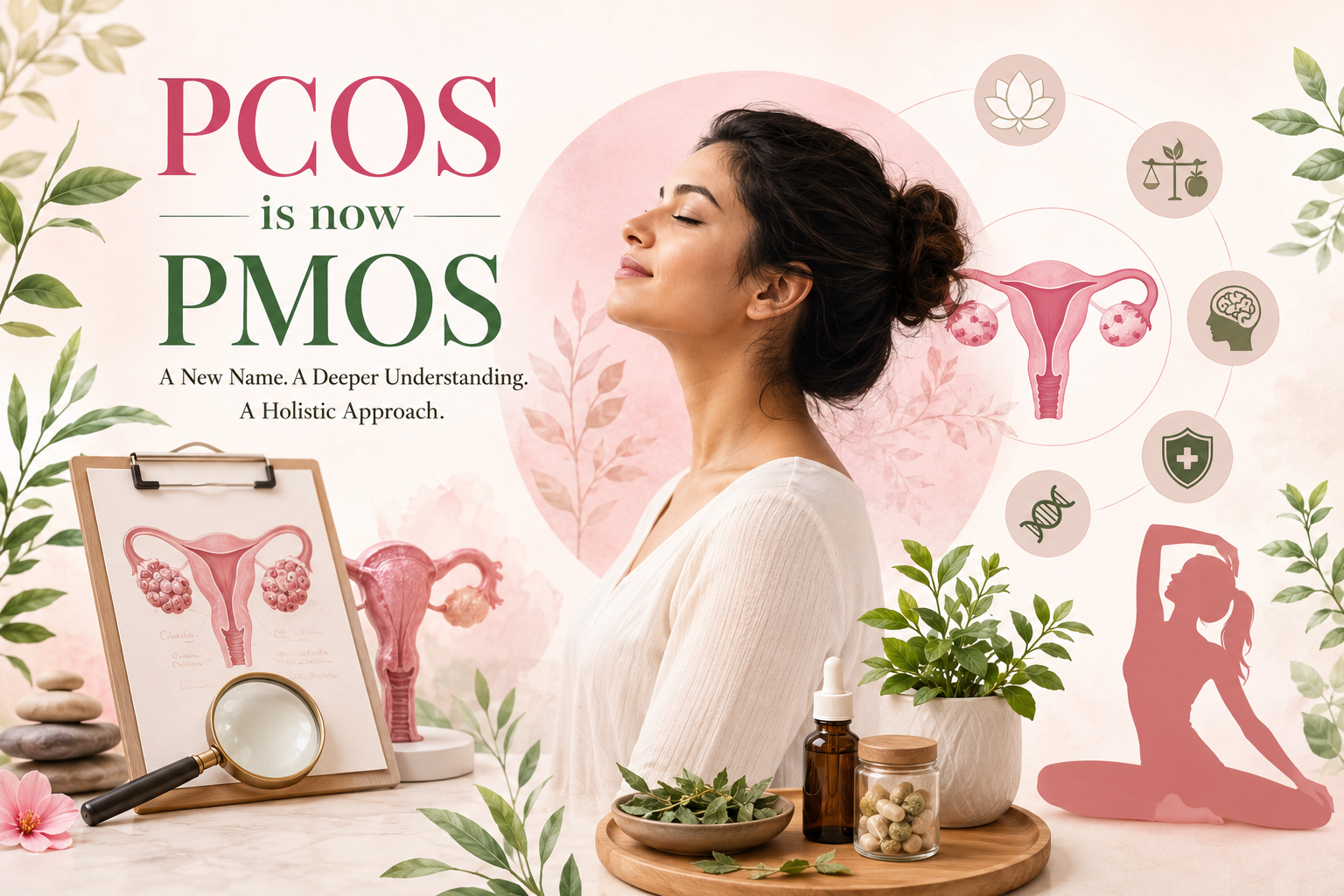
A Major Shift in Women’s Health
After nearly two decades, the global medical community has renamed PCOS (Polycystic Ovary Syndrome) to PMOS: Polyendocrine Metabolic Ovarian Syndrome.
This change reflects a deeper understanding of the condition. PMOS is not just about ovarian cysts or irregular periods. It is a complex condition that affects:
Today, nearly 1 in 8 women are affected, and almost 70% of cases remain undiagnosed.
Why the Name Change Matters
The term PCOS often created confusion and led to an incomplete understanding of the condition. The new term, PMOS, better represents the full-body impact of this syndrome.
The older term “PCOS” often resulted in:
PMOS recognizes that the condition involves multiple hormonal and metabolic systems, not just the ovaries.
Diagnostic Criteria for PMOS
A diagnosis is typically made when any 2 out of the following 3 criteria are present.
1. Irregular or Absent Ovulation
2. Excess Androgens (Male Hormones)
3. Ovarian Findings
Difference Between PCOS & PMOS
| PCOS | PMOS |
| Polycystic Ovary Syndrome | Polyendocrine Metabolic Ovarian Syndrome |
| Focus mainly on ovaries & irregular periods | Focus on hormones, metabolism & overall health |
| Seen largely as a reproductive condition | Recognized as a multisystem disorder |
| Ovarian cysts emphasized | Insulin resistance & metabolic health emphasized |
| Treatment focused on symptom management | Holistic & root-cause approach |
| Limited understanding of emotional & metabolic impact | Includes emotional, hormonal & metabolic wellbeing |
PMOS reflects the true complexity of the condition far beyond ovarian cysts alone.
Why a Holistic & Individualized Approach Matters
Too often, treatment focuses only on temporarily controlling cycles through contraceptive pills. While these may help manage symptoms, they may not always address the underlying hormonal and metabolic imbalance.
Every woman experiences PMOS differently. Symptoms can include:
Because no two cases are exactly alike, treatment should be personalized to the individual rather than based only on the diagnosis.
Homeopathy for PMOS
PMOS is not just a reproductive condition, it is a hormonal, metabolic, and emotional imbalance that can affect the whole body.
Homeopathy takes a holistic and individualized approach by looking beyond irregular periods or ovarian cysts alone.
Treatment focuses on supporting:
Since every woman experiences PMOS differently, homeopathic treatment is tailored according to the individual’s physical, emotional, and lifestyle patterns rather than following a one-size-fits-all approach.
Final Thoughts
The shift from PCOS to PMOS marks an important step toward better awareness, earlier diagnosis, and more comprehensive care for women.
Understanding the condition as a multisystem disorder encourages a more holistic approach: one that supports hormonal, metabolic, emotional, and reproductive health together.
If you are experiencing symptoms like irregular periods, acne, weight gain, hair fall, fatigue, or difficulty conceiving, seeking timely guidance and individualized care can make a meaningful difference in long-term health and wellbeing.